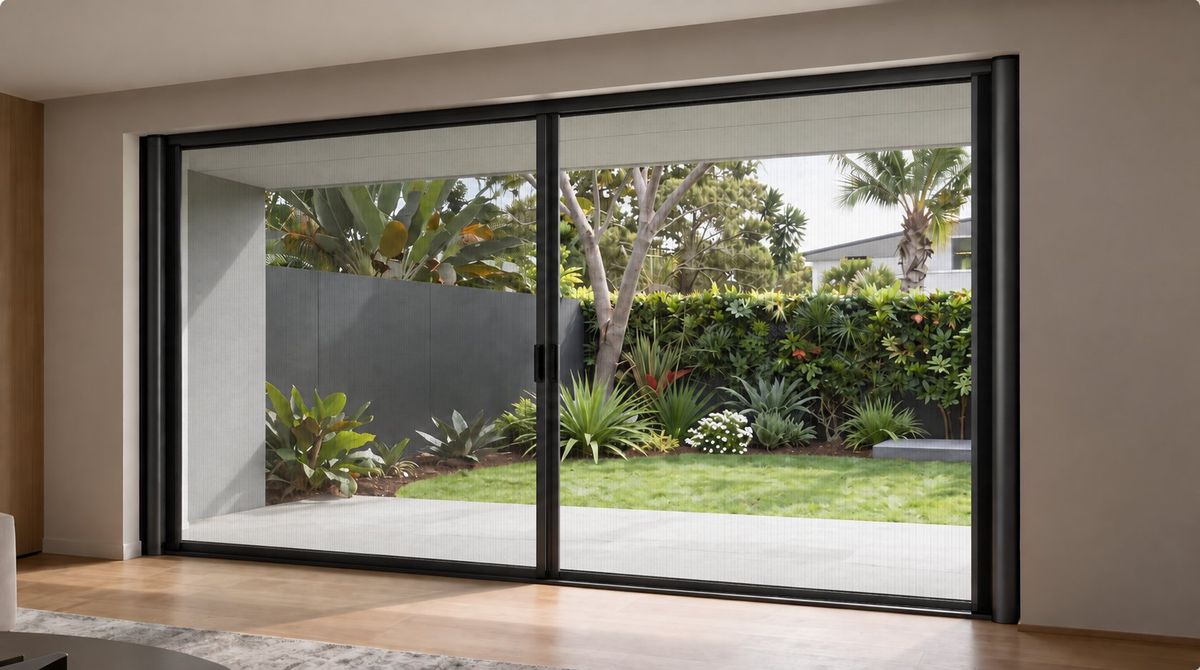
Bifold and French doors are the hardest openings in a Sydney house to screen, and almost nobody explains why before you buy. The problem is not the mesh. It is the geometry: these doors are wide, they fold or swing, they have no spare frame to screw a fixed screen into, and they usually sit in the one part of the house that actually needs airflow.
This guide is specifically about retractable fly screens for bifold and French doors — how they work, what they cost in Sydney in 2026, what to measure before you ask for a quote, and the four ways these installations fail. If you are still deciding between a fixed and a retractable screen for a normal window, our retractable vs fixed flyscreen comparison is the better starting point.
Quick answer: bifold and French doors need a retractable screen, not a fixed panel, because the screen has to disappear when the door is open and cannot block the leaves as they fold or swing. Budget AU$350–$600 per m² for a quality retractable screen, with a minimum charge of 2 m² — wide four-panel bifolds cover more area and can run to several thousand dollars. The single biggest failure is a screen specified without a bottom track on an exposed opening — the mesh bows and the screen will not latch.
What's in this guide
Why these doors break normal flyscreens
A standard fixed flyscreen is a rigid frame with mesh, screwed permanently into a window or door frame. That works on a single hinged door because the door swings away from the screen and the screen stays put. It falls apart on bifold and French doors for three reasons:
- There is nowhere to fix it. A bifold door has no fixed outer frame on the opening side — the leaves travel across the whole width. A fixed panel would sit in the traffic path.
- The opening is too wide. A four-panel bifold can be 3.6m or more. A fixed screen that width is a structural panel, not a flyscreen, and it blocks the view you bought the doors for.
- Both leaves move. On French doors both panels swing, so a screen has to cover an opening that changes shape as the doors open.
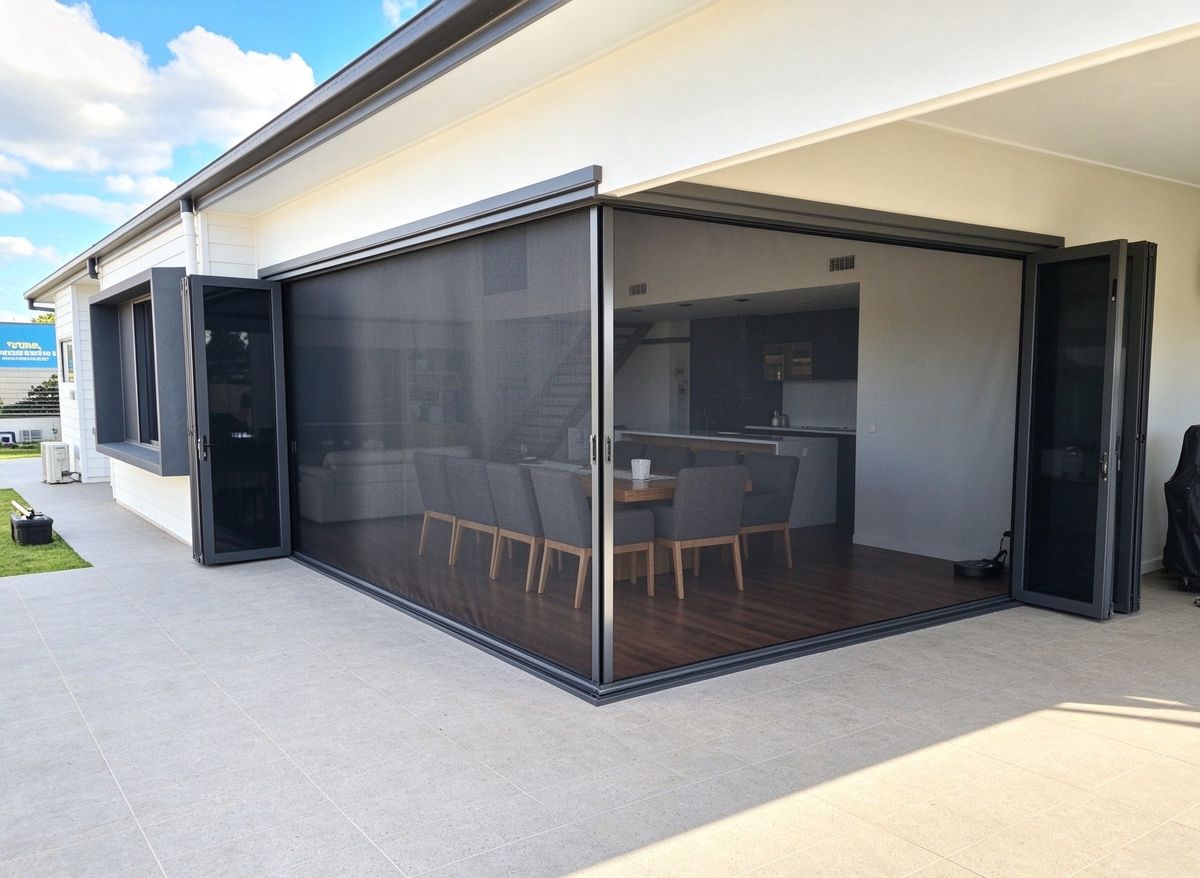
That is why the screen has to retract: it lives in a cassette at one side, pulls across only when the doors are shut, and disappears completely when they are open. On a bifold, the cassette usually sits at one end of the opening and the screen pulls across the full span, tracking in a guide at the top and — on exposed or wide openings — at the bottom too.
Bifold doors: what the screen has to do
Bifolds are the harder of the two, and the details decide whether the screen is usable:
- The screen spans the whole opening, not one leaf. You pull it across once the doors are closed, so it covers the full width in a single panel. That is why wide bifolds need a heavier cassette and a stronger spring than a standard door screen.
- The top track carries the load. On most systems the cassette is at the side and the screen runs in a top guide. On spans over roughly 2.4m, a bottom guide is strongly recommended — without it the mesh bows in the middle and the leading edge will not sit flush against the closing post.
- The bottom track is a trip hazard and a design decision. A bottom rail is the most reliable option but it sits proud of the floor by a few millimetres. On a flush alfresco threshold people often prefer a low-profile guide; on an exposed or windy site we push for the full bottom track.
- The stack position matters. The cassette needs somewhere to live — usually the wall at one end of the opening. If a bifold stacks hard against a return wall with no room, the cassette has to go on the opposite side, which changes the pull direction.
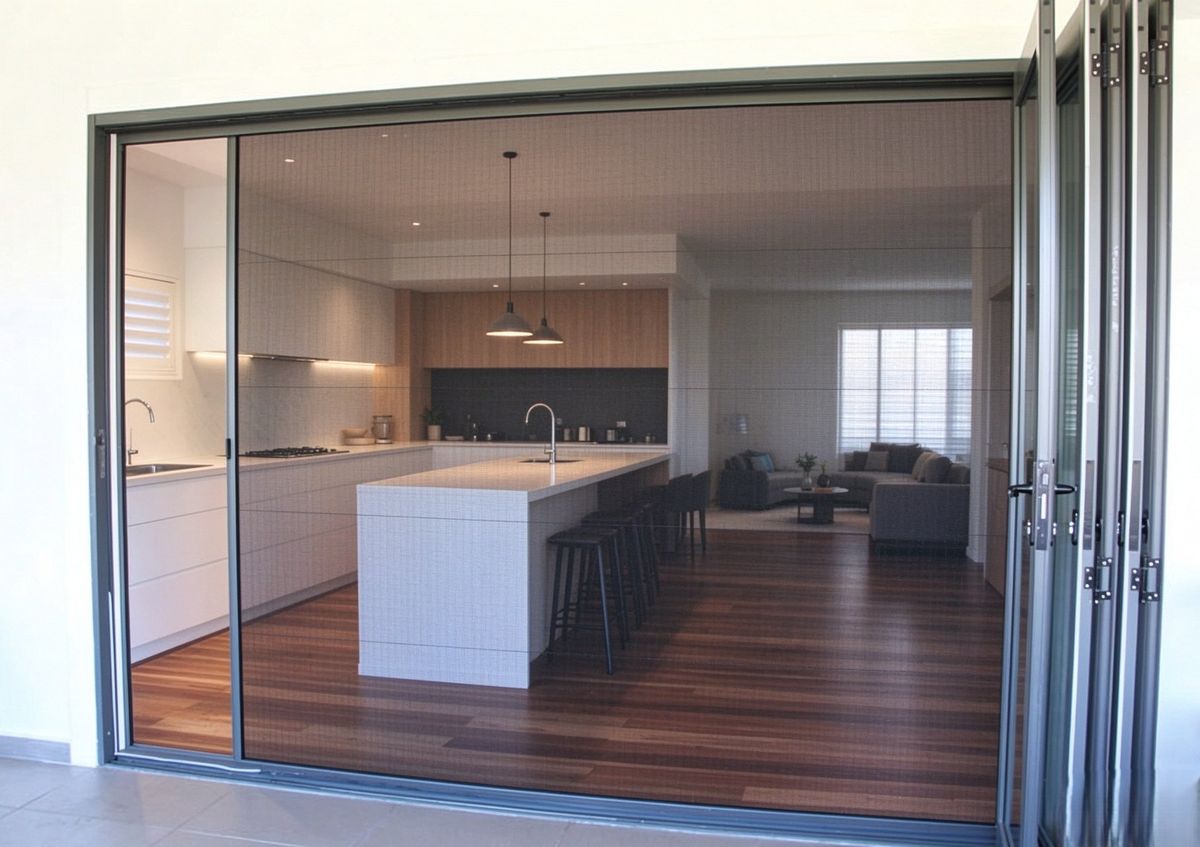
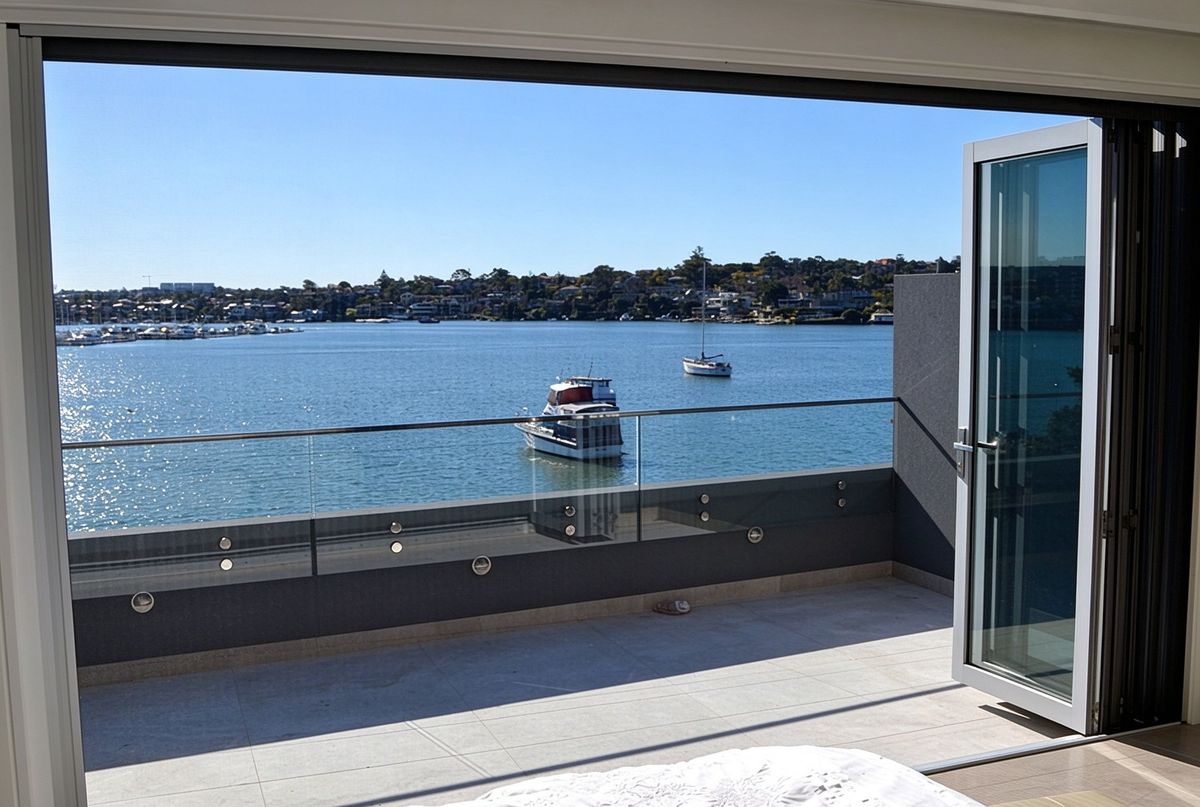
Rule of thumb: on any bifold wider than about 2.4m, insist on a bottom guide. It is the difference between a screen that latches cleanly for ten years and one that flaps and gaps within two summers.
French doors: single and double leaf
French doors are simpler, but the leaf count changes the specification:
- Single leaf opening outward. The easiest case. The cassette mounts on the hinge side or the closing side, the screen pulls across the one opening, and a magnetic or latch catch holds the leading edge. This is the cheapest retractable screen configuration.
- Double leaf, both opening outward. The screen has to cover the full width including the centre join. You pull it across both leaves once they are closed. The centre join is where light and insects get in if the screen is undersized — measure the full outer frame, not one leaf.
- Double leaf, one fixed and one opening (a "French door pair" with a slave leaf). Common on older Sydney terraces. You can screen the opening leaf only, which is cheaper, but the fixed leaf still needs to be sealed against the frame or you have a permanent gap.
- Inward-opening French doors. Rarer, and harder. The screen has to sit on the outside face, which means the cassette is exposed to weather and needs a properly sealed housing.
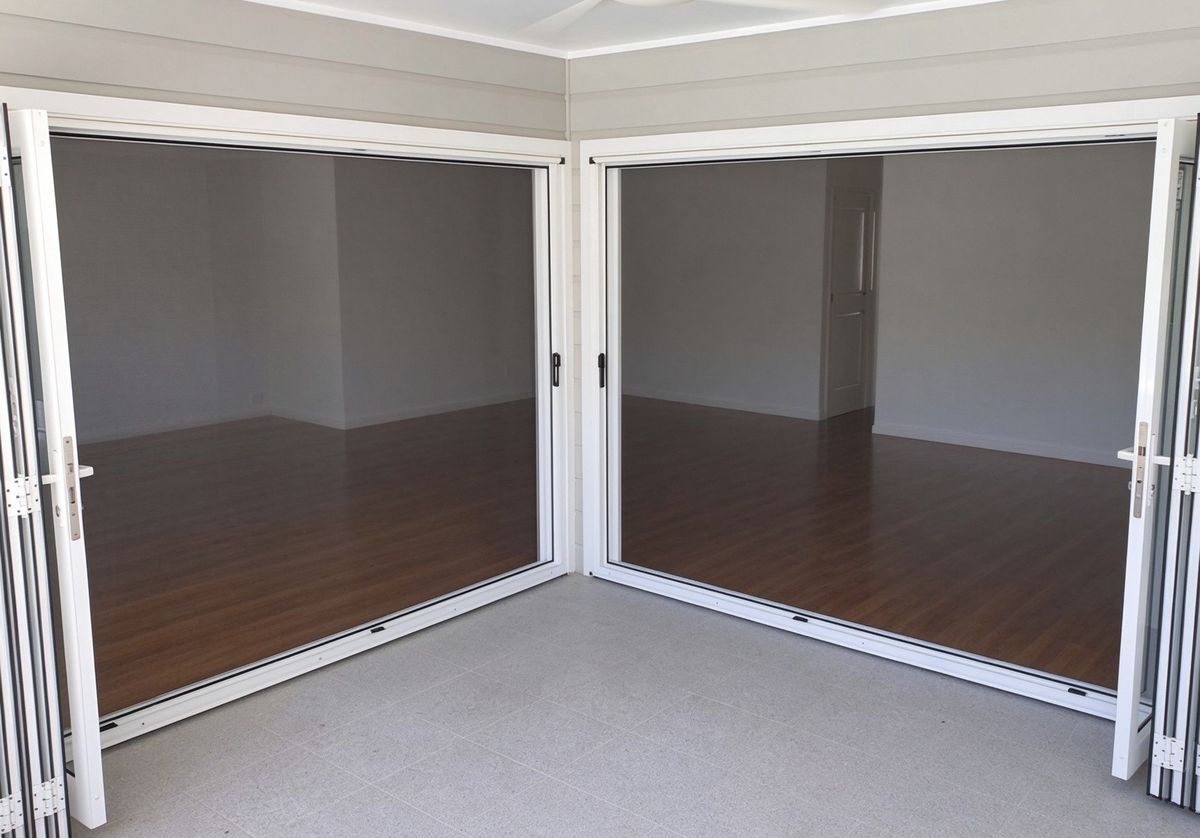
One detail people miss: door furniture. A lever handle, a deadbolt or a flyscreen door closer all need clearance behind the screen. Mention them at the measure — retrofitting around a handle after the screen is made is a re-make, not an adjustment.
Four screen types compared
| Type | Works on bifold / French? | Best for |
|---|---|---|
| Fixed panel | No on bifolds; only on a single hinged leaf | Windows and single hinged doors |
| Magnetic / velcro panel | Poorly — sags on spans over about 1.2m | Rentals and temporary setups |
| Pleated (accordion) screen | Yes, and it folds out of the way neatly | Narrow to medium openings where the stack needs to be compact |
| Retractable roller screen | Yes — the standard choice for wide openings | Bifolds and French doors, especially exposed sites |
Pleated and retractable both work. The trade-off is stack depth versus span: a pleated screen packs into a very slim stack but struggles on very wide spans, while a roller screen handles width better but needs a deeper cassette. On a 3m-plus bifold we almost always specify roller. For the wider question of insect screening across the whole house, see our retractable flyscreen range.
What it costs in Sydney (2026)
| Type | Typical price | Priced by |
|---|---|---|
| Fixed flyscreen | $60–$200 | per panel |
| Pleated flyscreen | $200–$500 | per m² |
| Retractable flyscreen | $350–$600 | per m² (min. 2 m²) |
| SYNC retractable flyscreen | $380 | per m² (min. 2 m²) |
| Add a bottom guide / track | +$80–$220 | one-off surcharge |
| Add a pet-resistant mesh upgrade | +$60–$150 | one-off surcharge |
| Oversize cassette for spans over 3.6m | Quoted per m² | after measure |
Why the range is so wide: the cassette and the spring do the work, not the mesh. A cheap screen on a 3.6m bifold will pull across once and never retract cleanly again, because the spring was sized for a 900mm door. Ask what span the cassette is rated for and get it in writing. Mesh choice matters too — a standard insect mesh is fine for most Sydney sites, but on a coastal or bushfire-adjacent block you want a tighter, stronger weave.
What to measure before you quote
You do not need to measure it yourself — we do that on site — but knowing these five things means you can tell a good quote from a bad one:
- Full opening width, outer frame to outer frame — not one leaf.
- Opening height, and whether there is a head above the door to fix the top guide into.
- Which way the leaves travel, and where they stack when open. This decides which side the cassette goes.
- Threshold detail — is the floor flush, is there a step, is there a drainage channel? A bottom track needs something solid to sit on.
- Exposure — is this opening facing the weather? A west or south-west facing bifold needs the heavier cassette and the bottom guide.
The four ways these screens fail
We get called to fix other people's installations often enough that the failure modes are predictable:
- No bottom guide on a wide span. The mesh bows, the leading edge gaps, and in wind the screen will not stay latched. By far the most common.
- Cassette undersized for the span. The screen pulls out but will not retract — the spring cannot wind the mesh back. Usually shows up within the first summer.
- Screen measured to one leaf instead of the full opening. You get a permanent gap at the centre join, which is exactly where insects come in on a French pair.
- Fixed to a weak surface. Screens are under constant spring tension. Fixed into a rendered or foam-backed wall without proper anchors, the cassette works loose and the screen drops out of its guide.
Where we install
We measure, make and install across Greater Sydney — the Inner West and Eastern Suburbs terraces with their narrow French pairs, the Northern Beaches and Sutherland Shire homes with wide bifolds onto a deck, and the newer builds through Parramatta, the Hills District and the south-west around Greenacre and Liverpool. See our service areas, or our project gallery for bifold and French door installations.
If you are outside Sydney we will tell you honestly rather than take a deposit we cannot service.
Our verdict
For bifold and French doors, a retractable screen is the only option that actually works — and the specification matters more than the brand. Buy a cassette rated for your full span, insist on a bottom guide above about 2.4m, measure the whole opening rather than one leaf, and make sure the cassette has a solid surface to fix to. Do that and a good screen will outlast the doors. Skip any of it and you will be re-doing the job in two years.
Frequently asked questions
Can you put a flyscreen on bifold doors?
Yes, with a retractable screen rather than a fixed panel. The cassette mounts at one end of the opening and the screen pulls across the full width once the doors are closed. Wide bifolds need a cassette rated for the span and, above roughly 2.4 metres, a bottom guide so the mesh does not bow.
Do retractable fly screens work on French doors?
Yes, and they are the standard solution. On a single outward-opening leaf the cassette mounts on the hinge or closing side and the screen pulls across one opening. On a double-leaf French pair the screen has to cover the full outer width including the centre join — measuring only one leaf is the most common cause of a permanent gap.
How much does a retractable fly screen for a bifold door cost in Sydney?
In 2026 retractable screens for bifold and French doors are quoted at AU$350 to AU$600 per m² with a minimum charge of 2 m², supplied and installed. A wide four-panel bifold covers several square metres, so its total can reach several thousand dollars. The cassette and spring, not the mesh, are what drive the rate.
Do I need a bottom track on a retractable fly screen?
On any opening wider than about 2.4 metres, or on an exposed site, yes. Without a bottom guide the mesh bows in the middle and the leading edge does not sit flush, so the screen gaps and will not stay latched in wind. On a narrow sheltered door a top-guided screen is often enough.
Will a flyscreen stop me closing the bifold doors?
No, if it is specified correctly. The screen retracts fully into its cassette, which sits at the end of the opening, so the doors stack and close exactly as they did before. The only thing to check is that the cassette position does not foul the stack — which is why the measure has to look at where the leaves travel, not just the opening size.
Can a retractable fly screen be fitted to an existing bifold?
Usually yes. Retractable screens are made to the opening and fixed to the surrounding frame or wall, so they do not depend on the door itself. The constraints are whether there is a solid fixing surface for the cassette, whether there is a head to fix the top guide into, and whether the threshold can take a bottom track.
Not sure a retractable screen will work on your bifold?
Book a free in-home measure. We will check the span, the stack position and the threshold, then tell you honestly whether the opening needs a bottom guide and which cassette is rated for your width.
Book a free measure & quoteOr call us at 0423 353 538
Sync Blinds Sydney is a family-owned window covering and outdoor living specialist based in Auburn, NSW. We measure, make, and install retractable flyscreens, blockout blinds, roller blinds, curtains, Zipscreen, awnings, pergolas and plantation shutters across Greater Sydney. Call 0423 353 538.